Value, Values, Ethics, Consumption

DISCUSSIONS:

Value What’s your definition of value?

It could be recognised in one of the traditional senses: the regard that something is held to deserve; the importance, worth, or usefulness of something.

“your support is of great value”

Or:

Estimate the monetary worth of.

“his estate was valued at £45,000”

Value-based price = sets prices primarily, according to the perceived or estimated value of a product or service to the customer rather than according to the cost of the product or historical prices. Example? 

A sale of Frank Sinatra’s Gold toilet for $4250. No one would typically pay this for a toilet but the fact that it’s owner was famous gave it additional perceived value.

https://www.apartmenttherapy.com/frank-sinatra-auction-gold-toilet-36711568

Jana Želibská
Kandarya-Mahadeva (1969/2010–2012)

According to the book: Postwar Italian Art History Today: Untying ‘the Knot’ by Sharon Hecker, Marin Sullivan Bloomsbury Publishing USA, 28 Jun 2018, Želibská’s work is a rejection of the worshiping of idols and mass consumption. The connection here to consumerism could be the use of the female form, that is often used to sell a product or an idea. Use of mirrors obscures the implied genitals and indicates the symbol of self-reflection. Aside from the obvious agenda of using beauty to engage a consumer, there is a similarity in the repeated behaviour of worship which is habitual and the addiction of making a purchase. The same feelings associated with behavioural addiction are tapped into: repetition=familiarity and safety, and feeling good from endorphins from the rush of something new.

Eugène Atget

The French photographer’s focus is on ‘Old Paris’ of which he famously said that he has captured all of it. The artist draws a comparison to the user experience of consuming from the past to the present. A photograph of a clothing store plays with the ambiguous nature of shopping through windows. The glass serves as a division for the consumer and the product but also offers a reflection, placing yourself within the space before you move to do so. The similarity between the old way of shopping remains, particularly with the process of entering a different environment that has been designed specifically to make you want to enter and then keep you there to buy something. Window displays today are more elaborate, but they have developed strategically from the original organic notion of creating an invitation that grabs your attention.
HOW OUR FOOD HABITS CHANGED

WHAT WILL BE THE FUTURE?

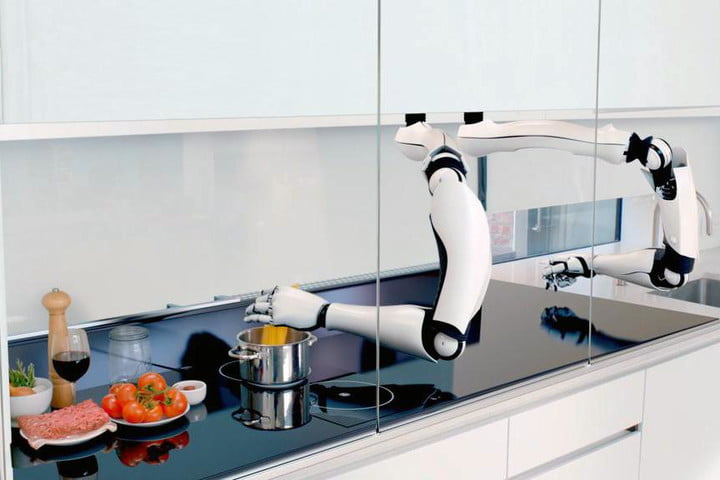
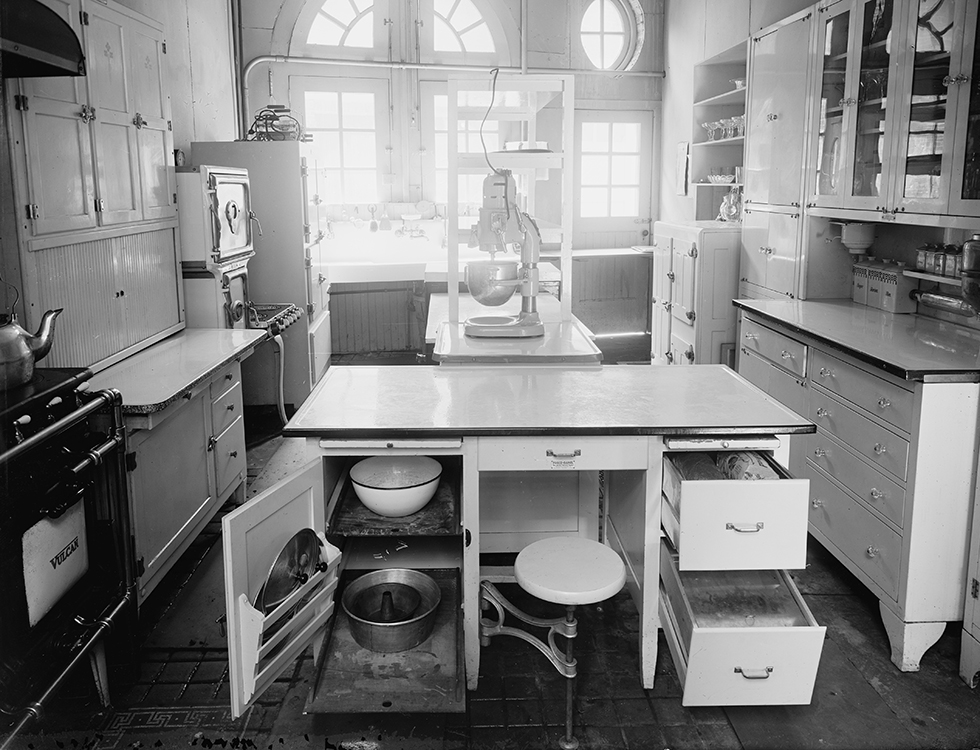
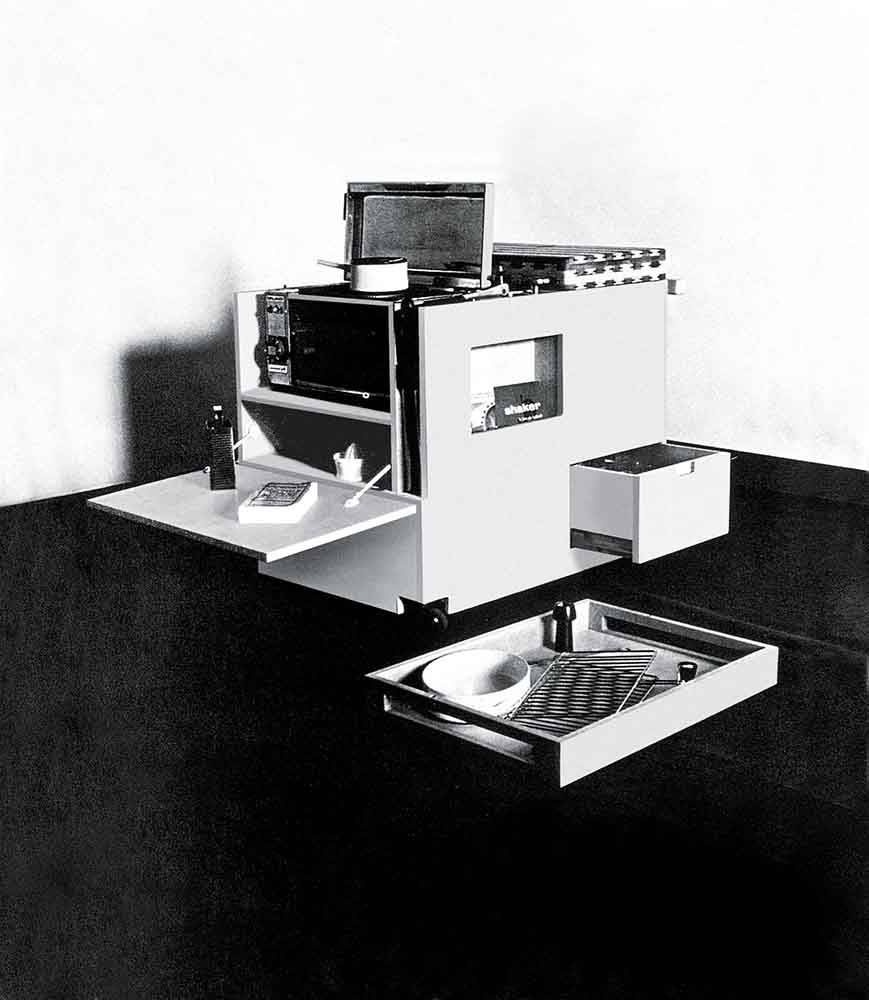
With this new trend the need of a kitchen in our houses is changing. Cooker and pots have been often replaced by the microwave oven. No more hours and hours spent cooking dinner for all the family. Because of that the importance of this room in a house is going to decline. In my opinion in a future not too far it will completely disappear from our life. We won’t need to cook anymore and probably we will hire intelligent robots capable to do so for us. Being realistic, technology still has a long way to achieve that before it will happen. But with all the advance we can see everyday, that will definitively be the future. Even if eating is one of the main needs for every living creature, I think for many cultures nowadays it has become more like a pleasure. You can decide when and where to eat, and above all what to eat. The practice of cooking itself is slowly disappearing, unless someone else is doing it for us. More and more often this figure is a professional, from whom we buy food ready to eat. There is no more the need to go to markets and buy fresh food like vegetables, meat or fish, instead we can easily order dishes ready to eat from an app. The food delivery industry is the fastest growing business on the market of the last decade and it doesn’t look like going to stop any time soon.

Having a drink in a coffee shop

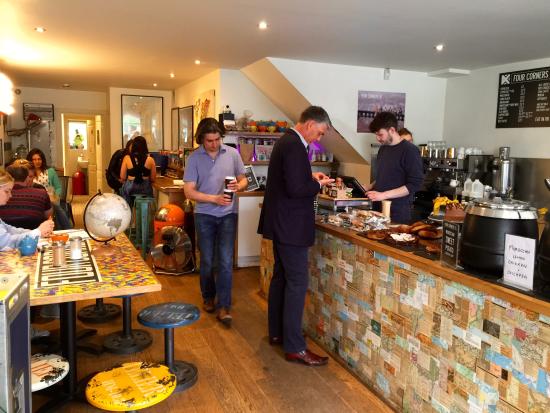
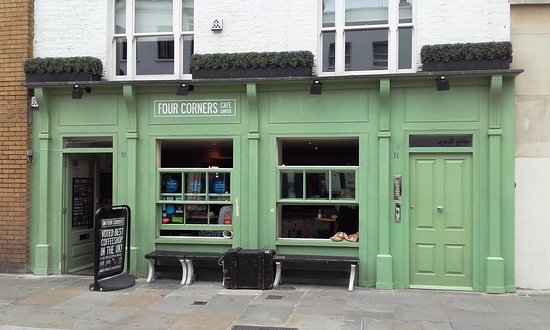
For this project I chose the experience of a coffee shop with a friend. We walk in and the first think I notice is that the space is overloaded with furniture. Mainly they are tables, chairs and stools, then there are a couple of fridges and a bookshelf. Obviously there isn’t enough space to walk around the seats. There are only three members of the staff: a barista, a girl assigned to wash the pottery and a guy at the counter. We move on to the till, we order and finally we sit down at a small table, just big enough for 2 or 3 people.

The back of my chair keeps bumping against the chair behind me. It’s really annoying. After a couple of minutes, the two coffees we ordered arrive at the table.
We are enjoying our drink, but because of the narrow corridor, the people passing by or waiting for takeaway, keep pushing us from the side.

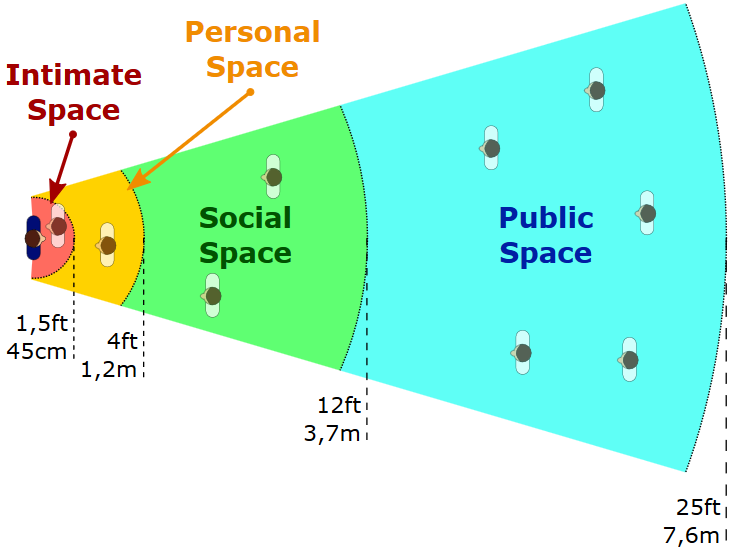
I feel that our personal space is inexistent and violated. Definitely not a comfortable situation. However, the atmosphere of the place in general feels cosy. There is no music, it’s quiet. The only noise comes from the cups clashing with each other behind the counter and from the traffic outside. The two big windows on the front of the shop are open to allow some fresh air to come inside.

The room is stuffed with smell of coffee. I can feel it on my clothes too.

MODERNIST BUILDING IN LONDON

Isokon Building

Today we are talking about the principles of Modernism through concept and buildings realised in the period. Modernism flourished between the two world wars. It was a philosophical movement, a life style for the new modern era. It didn’t stop to art, design and architecture but it also expanded into psychology, political theory and science. We found modernist influence all over the globe. We’ll focus on the main principles on which architecture has based its revolution.  These are: form follows function, the interior, relation between public and private space and the modernist utopia. Talking about “form follows function” we took as example the Isokon building in Hampstead, here in London. Built between 1933-34 it was designed by Wells Wintemute Coates. How you can see the outside of the building is very clear and it doesn’t leave space to any decoration. The windows and the balcony create clear and crisp line that repeat from the ground to the roof, almost as to create an aseptic place but still leaving space to harmony. The balcony follows the shape of the building and connects the opposite staircases to make easier to access the apartments from both sides.  The staircases have been designed outside the main structure to allow more volume to the private space.

Every area of the unit and in the building has been imagined to host a specific function. Every piece of furniture is customised to fit with the space which it’s collocated in.  In a certain way the resident is not allowed to personalise it according to its own taste. 

VISIT AT THE DESIGN MUSEUM

The every day rituals

The ritual of making a cup of tea is know to anyone. Is almost and action that doesn’t request any afford. Poor the hot water in the pot, add the tea bag, wait for a couple of minuts and that pour the hot beverage in the cup. It’s so simple that all the steps become natural to us. That is exactly what a ritual is. An action which is divided in a series of acts. Doesn’t matter if it happens in the morning, in the evening or in the afternoon, it’s just a moment of pleasure. We like rituals a lot, they make our life easier and we save time. We are comfortable and confident when our day is punctuated by our owns. And we feel unstable if one of them are ruined.  Tea ritual is presents in many cultures, especially in Asia and South America. Here in U.K. there’s a big culture for the hot drink. Almost become an necessity against the cold weather. 

BOOK CLUB

THE GLASS ROOM – Simon Mawer

Why are the Landauers so devoted to modernity? 

The influence of Viktor is the main reason. That’s because his job. The car industry is into future, speed, modernity, new shapes and materials. They take this spirit into they life and they get inspired. In a carnet way they get bored of all attitudes and they looking for a more excited life. But we can forget they can do that thanks the health economic status of the husband. War, new family, political struction, 

Why do they want to leave the past behind? How does this play into their country’s past and future?

They are looking for a more exciting way to live. They are annoying from those old style decorations in their temporary house. They want to be deferent from the other people, form the society. They want be recognized as a higher social class. It’s not a case the glass house has been built on top of the hill.

Discuss your impression of Rainer von Abt? 

He’s a free person. He found he style as architect. His work is a clear cut from the past, he has a clear vision of what the future will be. He is not scare of new challenges. But in the personal life is not so confident.